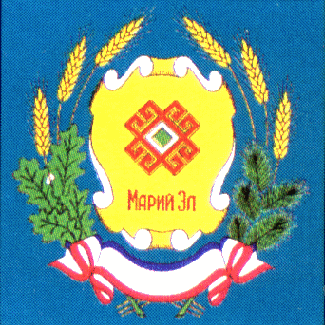
 , the Hymn and the National Flag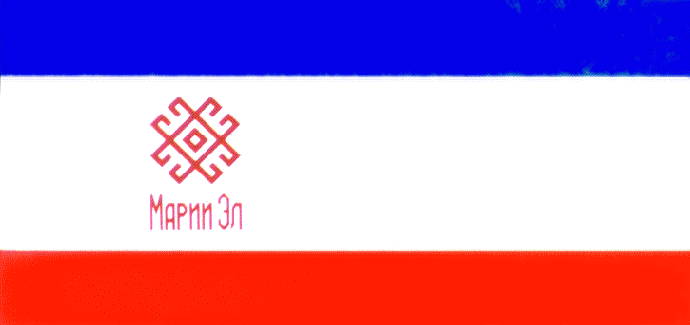
Republic of Mari El is a part of Russia. It is located in the middle of the European part, in the basin of the great Russian river Volga. The area is 23.2 thousand square kilometres, the population is more than 760,000 people. The capital is Yoshkar-Ola. The Republic is surrounded by industrially developed areas: the Volga and the Ural regions. Yoshkar-Ola is 862 kms far from Moscow and it is connected with other regions by railway and road, boat and airplane communications.
The Maris (their former name - Cheremis people) belong to the Volga branch of the Finno-Ugric peoples. Traditionally they lived on the vast areas between the Volga and the Ural.
The Soviet power was declared at the beginning of 1918. On the 4th of November 1920 Mari Autonomous Region, and in 1936 Mari Autonomous Republic was founded. On the 22nd of October 1990 the sovereignty of the Republic was declared. At the end of 1991 the presidency was introduced in the Republic of Mari El, and the Supreme Soviet adopted
the Arms,, the Hymn and the National Flag
of the Republic of Mari El.
47.5 per cent of the total population are Russians, 43.5 per cent - Maris, 5.9 per cent - Tatars. Here also live Chuvashes, Udmurts, Mordovians, Ukrainians and others. Mineral resources of the Republic are non-metal: peat, sand, clay, building stone, lime. Geologic research of the recent years has revealed the existence of oil, rare and precious metals, gyps and other mineral wealth in the entrails. There are mineral springs in resort places too.
The main treasure of the Republic is forest that covers about 50 per cent of the territory. The woods of Mari El are called "lungs" of the Mid-Volga region and they are rich in mushrooms and berries. Mari El is an industrial and agricultural republic. The share of industry in G.D.P. is 46.5%, and that of agriculture is 28.5%. The most developed branches of industry are mechanical engineering, timber and woodworking industry, food processing and consumer goods production industry. About 70% of the amount of refrigerating equipment for shops and cafes are manufactured by enterprises of Mari El.
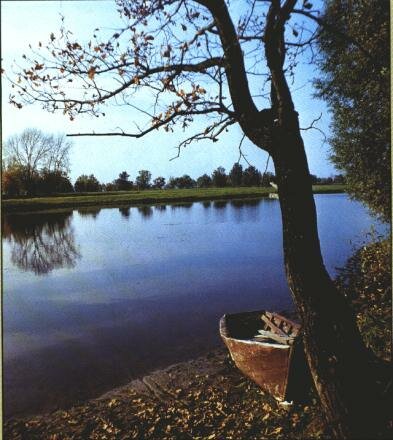 The Republic has a unique natural environment that is famous for its ecological cleanness. The rivers Ilet, Bolshaya Kokshaga, Yushut, Kundysh are among the ecologically cleannest rivers in Europe. The forest lakes Yalchik, Kichiyer, Karas are geniune peals of Mari El. Elks, wild boars, bears, hares, squirrels, martens, caper caillies, black grouses, hazel grouses are found in Mari woods. 45 species of fish are in the lakes and rivers of the Republic.
For centuries the spiritual life of Maris was closely connected with paganism. Sacred ceremonies were accompanied by performing ancient hymns, historic balades, prayers to the accompaniment of gusli (similar to kantele). Other traditional musical instruments are a sahuvir (bagpipes) and a tumire (a drum).
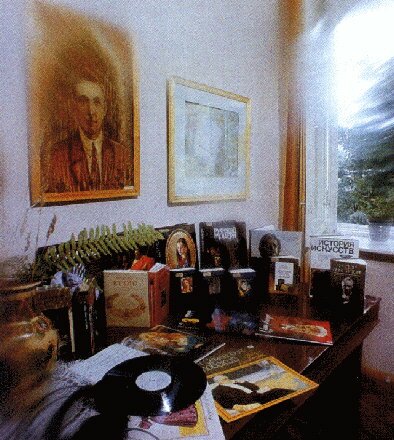 Mari music was professionally arranged only in the 20th century. The first Mari composers - Ivan Palantai, Yakov Eshpai, A. Iskandarov - created symphonic and instrumental music that absorbed singing and folk art of common people.
The written Mari language is known from the middle of the 18th century. Since that time the Mari literature has developed considerably in all genres. Mari painting is known in connection with the names of Nikolai Feshin, Alexandr Grigoryev, Konstantin Yegorov.